
Search

Two projects led by The Kids Research Institute Australia have been awarded more than $2.5 million to fund innovative ideas focused, respectively, on combating persistent ear infections and investigating how dangerous fungi invade the bodies of immunocompromised people.
Peter Ruth Elke Richmond Thornton Seppanen MBBS MRCP(UK) FRACP PhD BSc PhD Head, Vaccine Trials Group Co-head, Bacterial Respiratory Infectious
Ruth Elke Peter Thornton Seppanen Richmond PhD BSc PhD MBBS MRCP(UK) FRACP Co-head, Bacterial Respiratory Infectious Disease Group (BRIDG) Program
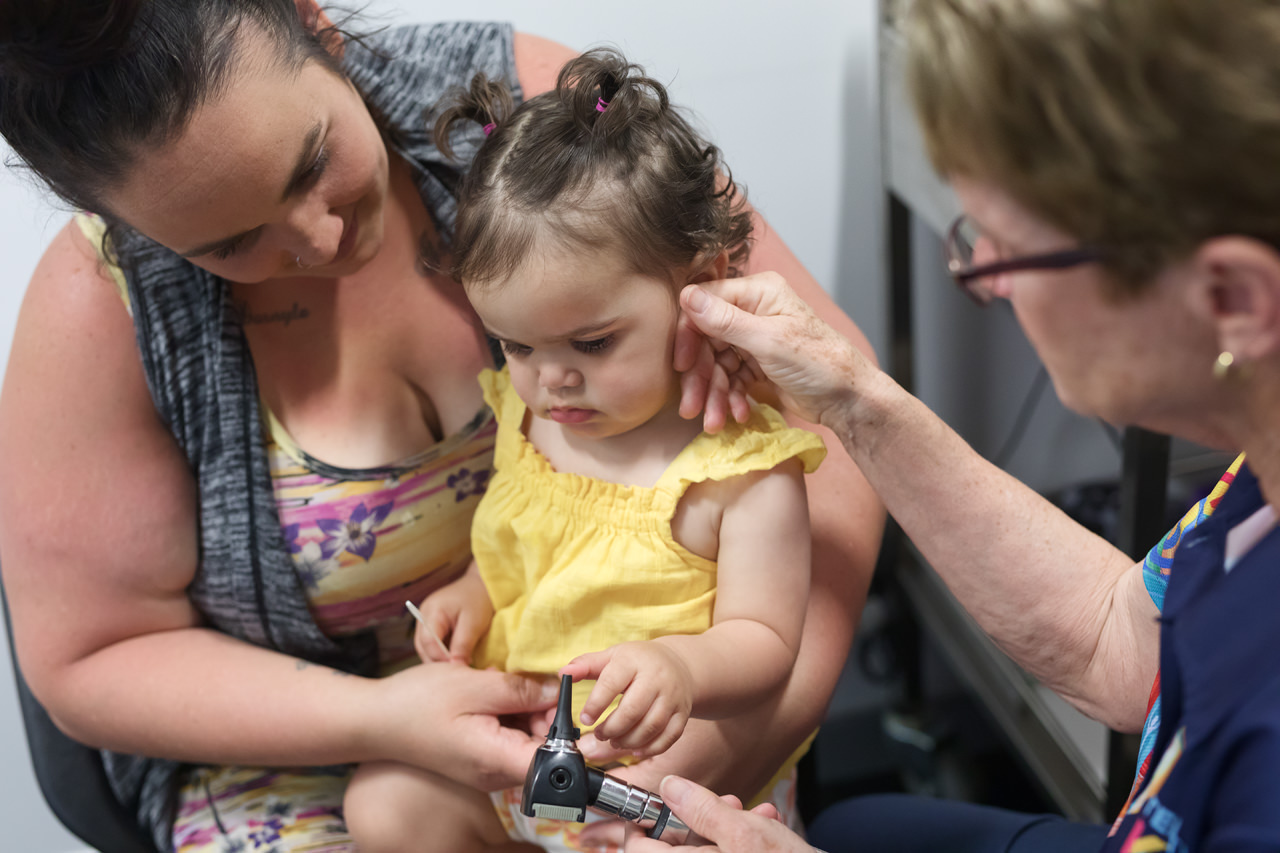
Researchers from The Kids Research Institute Australia have been awarded a $1.1 million NHMRC ‘Targeted Call for Hearing Health’ grant to conduct the first ever study following Aboriginal babies from birth through to five years to uncover the true prevalence of middle ear infections and hearing loss.
Glue ear is when a child's middle ear fills with sticky fluid behind the ear drum. A common condition, glue ear usually goes undetected, as it's not an obvious condition from the outside.
We explore the contemporary landscape of housing investments and initiatives seeking to improve health outcomes among Aboriginal and Torres Strait Islander people in Australia, as well as the dearth of quality evidence and agreed approaches to evaluation.
The purpose of this study is to explore the effectiveness of a hospital-based asynchronous ear, nose, and throat telehealth service (the Ear Portal) in reducing cost and improving access for children with otitis media.
Chris Valerie Brennan-Jones Swift PhD Head, Ear and Hearing Health Aboriginal Co-Director, Djaalinj Waakinj Centre for Ear and Hearing Health;
Telemedicine, particularly real time video-otoscopy in rural and remote Australia holds great potential in assessing and managing otology conditions. There is good evidence of store and forward images for assessment, however limited evidence exists for the use of real-time video-otoscopy. The objective of this study was to assess the validity of using real time video-otoscopy, compared to standard store and forward still image otoscopy, in a paediatric population.
Tonsillectomy and adenoidectomy are two of the most commonly performed ENT procedures in children, with over 500,000 cases performed annually in the United States. Whilst generally considered a safe and well-tolerated operation, it is not without its risks and complications including pain, nausea, anorexia and most importantly bleeding and post-tonsillectomy haemorrhage.