
Search
Showing results for " buy cvv2, 【 Visit Amsiga.com 】 ojM3t2s., cc shop carding, gift card no vbv, www validcc UNt2"
There is no clear clinical guidance on the use of alcohol pharmacotherapies in pregnancy due to insufficient safety information. Contraception should therefore be considered for reproductive-aged females receiving alcohol pharmacotherapies not wishing to become pregnant. This study evaluated the concurrent use of alcohol pharmacotherapies with prescription contraception and other medications in Australian females of reproductive age compared to those not receiving an alcohol pharmacotherapy.
Dysphagia, one of the most common complications in head and neck cancer (HNC) treated with radiotherapy, can severely affect patients’ quality of life. Currently, because no “gold standard” treatment exists, swallowing exercise remains the main rehabilitation strategy for dysphagia. However, patients’ compliance with long-term swallowing exercise is only 40%, thus, greatly compromising outcomes. This article aims to analyze thefactors influencing swallowing exercise compliance in patients with HNC and explains strategies developed to date for improved rehabilitation outcomes.
There is no validated evidence base on predictive ability and absolute risk of preterm birth by gestational age of the previous pregnancy. We conducted a retrospective cohort study of mothers who gave birth to their first two children in New South Wales, 1994-2016. For each week of final gestational age of the first birth, we calculated relative and absolute risks of subsequent preterm birth.
A multidisciplinary approach to caring for patients with malignant mesothelioma and their carers is vital.
No evidence to demonstrate relationships with symptoms and viruses, prolonged symptoms, prolonged shedding or patterns of virus infections in CF
The cloning of herpesviruses as bacterial artificial chromosomes (BAC) has revolutionized the study of herpesvirus biology, allowing rapid and precise manipulation of viral genomes. Several clinical strains of human cytomegalovirus (HCMV) have been cloned as BACs; however, no low-passage strains of murine CMV, which provide a model mimicking these isolates, have been cloned. Here, the low-passage G4 strain of was BAC cloned. G4 carries an m157 gene that does not ligate the natural killer cell-activating receptor, Ly49H, meaning that unlike laboratory strains of MCMV, this virus replicates well in C57BL/6 mice.
Chronic suppurative otitis media (CSOM), sometimes referred to as chronic otitis media, is a chronic inflammation and often polymicrobial infection (involving more than one micro-organism) of the middle ear and mastoid cavity, characterised by ear discharge (otorrhoea) through a perforated tympanic membrane.
Among Australian adolescents, the 4CMenB vaccine had no discernible effect on the carriage of disease-causing meningococci, including group B
We examined early signs of ASD in infants wit tuberous sclerosis complex, approximately 50% of whom will meet criteria for ASD by age 3.
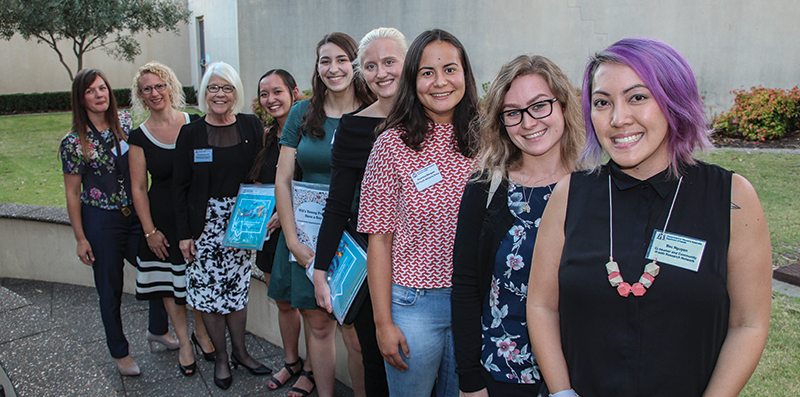
The Kids Research Institute Australia has long been recognised for the research it produces. But the way the Institute collaborates with the community – asking what they most want or need to know about and tailoring research to deliver those outcomes – is also leading the way.