Skip to content

Search

Conceptualising Wellbeing for Australian Aboriginal LGBTQA+ Young People

It is likely that young people who are both Aboriginal and Torres Strait Islander and LGBTQA+ would be at increased risk for poor mental health outcomes due to the layered impacts of discrimination they experience; however, there is very little empirical evidence focused on the mental health and wellbeing of Aboriginal and Torres Strait Islander LGBTQA+ young people. The current study represents a qualitative exploration of wellbeing among Aboriginal LGBTQA+ young people. 

Indigenous peoples and inclusion in clinical and genomic research: Understanding the history and navigating contemporary engagement

Despite significant improvements in pediatric cancer survival outcomes, there remain glaring disparities in under-represented racial and ethnic groups that warrant mitigation by the scientific and clinical community. To address and work towards eliminating such disparities, the Pacific Pediatric Neuro-Oncology Consortium (PNOC) and Children's Brain Tumor Network (CBTN) established a Diversity, Equity, and Inclusion (DEI) working group in 2020. The DEI working group is dedicated to improving access to care for all pediatric patients with central nervous system (CNS) tumors, broadening diversity within the research community, and providing sustainable data-driven solutions.

Differential DNA methylation of steatosis and non-alcoholic fatty liver disease in adolescence

Epigenetic modifications are associated with hepatic fat accumulation and non-alcoholic fatty liver disease (NAFLD). However, few epigenetic modifications directly implicated in such processes have been identified during adolescence, a critical developmental window where physiological changes could influence future disease trajectory. To investigate the association between DNA methylation and NAFLD in adolescence, we undertook discovery and validation of novel methylation marks, alongside replication of previously reported marks.

Immunisation

Immunisation is the most effective way of protecting your child against a range of serious illnesses, including measles, hepatitis B and whooping cough. All vaccines used in Australia undergo stringent testing and ongoing monitoring.

Giving kids with CF a chance at a longer, healthier life

COMBAT CF is one of two long-standing international trials which have resulted in new early intervention options helping to reduce progressive lung damage in kids living with CF.

It takes a village: how the CRE helped shape FASD policy and practice

The FASD Research Australia Centre of Research Excellence (CRE) has substantially built the evidence base around FASD and had a significant impact on advocacy, policy and practice.

The ORIGINS Project: A platform for research discovery

The ORIGINS Project is a decade-long longitudinal study of more than 18,000 individuals including mothers, partners and children, as part of a collaboration between The Kids Research Institute Australia and Joondalup Health Campus.

How traditional bush tucker could help boost Aboriginal children’s vitamin D

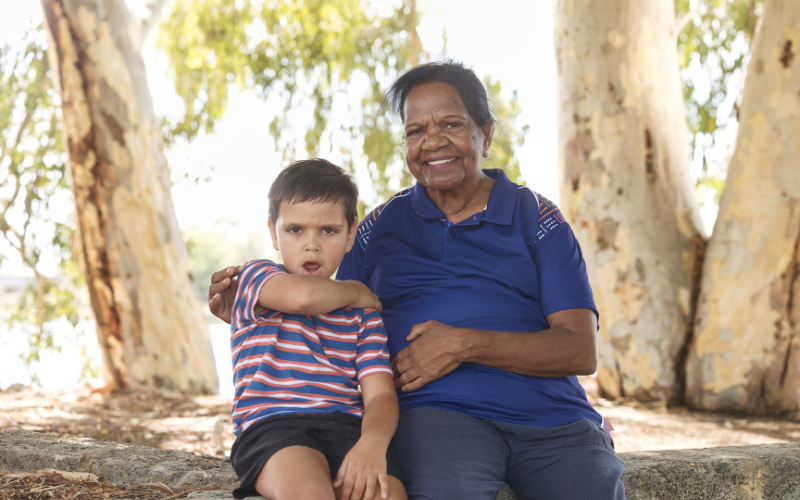
Researchers are collaborating with Community Elders to find out how bush tucker and traditional food can improve the health of Aboriginal children.

Partnering with government to influence policy and practice

The Kids Research Institute Australia Government Relations Advisor Fiona Roche said the BEACHES project was a great example of how the Institute is increasingly working in partnership with Government

DCD a heavy burden for little Toby

Meet Toby - he has developmental coordination disorder (DCD), a neurodevelopmental condition that causes delays and impairments in fine and gross motor skills.