
Search
Parents are often expected to be the primary implementers of intervention for their young children with autism spectrum disorder (ASD). The provision of a few hours a week of intervention by a trained therapist, in addition to parent-implemented intervention, could increase child outcomes compared to parent-implemented intervention in isolation.
The breadth of available non-pharmacological interventions for autistic children, with varying evidence for efficacy summarised in multiple systematic reviews, creates challenges for parents, practitioners, and policymakers in navigating the research evidence. In this article, we report the findings of an umbrella review of 58 systematic reviews of non-pharmacological interventions for autistic children (aged 0–12 years).
A diagnosis of an autism spectrum condition (autism) provides limited information regarding an individual’s level of functioning, information key in determining support and funding needs.
The use of spoken and written language is a fundamental human capacity. Individual differences in reading- and language-related skills are influenced by genetic variation, with twin-based heritability estimates of 30 to 80% depending on the trait. The genetic architecture is complex, heterogeneous, and multifactorial, but investigations of contributions of single-nucleotide polymorphisms (SNPs) were thus far underpowered.
The developmental origins of handedness remain elusive, though very early emergence suggests individual differences manifesting in utero could play an important role. Prenatal testosterone and Vitamin D exposure are considered, yet findings and interpretations remain equivocal.
Substantial genetic correlations have been reported across psychiatric disorders and numerous cross-disorder genetic variants have been detected. To identify the genetic variants underlying general psychopathology in childhood, we performed a genome-wide association study using a total psychiatric problem score.
This study sought to determine the prevalence of Developmental Language Disorder (DLD) in Australian school-aged children and associated potential risk factors for DLD at 10 years.
CliniKids is the first clinical service of The Kids Research Institute Australia, providing autism therapies and supports for young children.
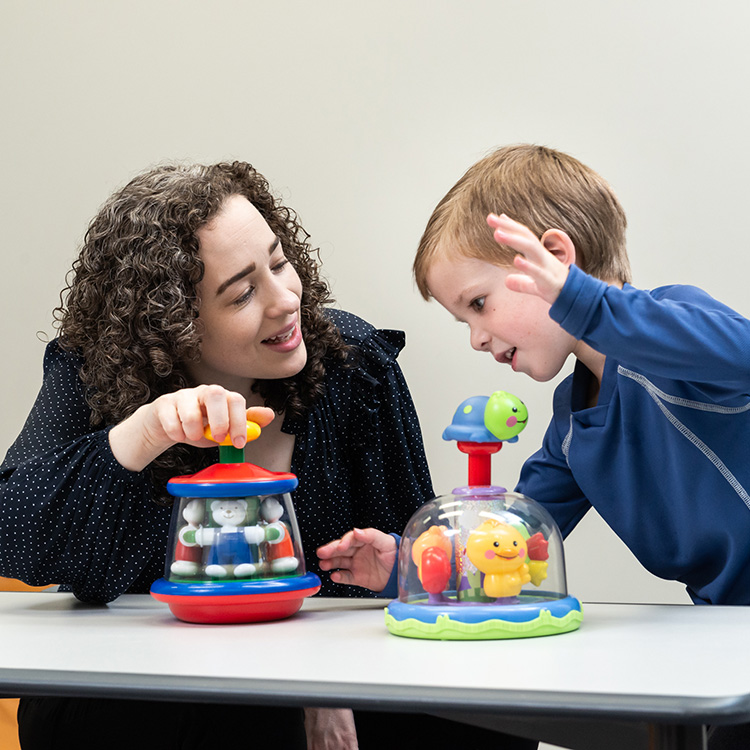
CliniKids is a not-for-profit centre integrating world-class research with a clinical service for children with developmental delay and/or autism, and their families. It is the first of its kind for autism in Australia.
Our team of world-class researchers and exceptional clinicians work in collaboration to provide children access to the very best evidence-based therapies and programs.