
Search
Perinatal inflammation increases the risk for bronchopulmonary dysplasia in preterm neonates, but the underlying pathophysiological mechanisms remain largely unknown. Given their anti-inflammatory and regenerative capacity, multipotent adult progenitor cells (MAPC) are a promising cell-based therapy to prevent and/or treat the negative pulmonary consequences of perinatal inflammation in the preterm neonate.
Surfactant is a well-established therapy for preterm neonates affected by respiratory distress syndrome (RDS). The goals of different methods of surfactant administration are to reduce the duration of mechanical ventilation and the severity of bronchopulmonary dysplasia (BPD); however, the optimal administration method remains unknown.
Preterm infants have immature control of breathing and impaired pulmonary gas exchange. We hypothesized that infants with bronchopulmonary dysplasia (BPD) have a blunted ventilatory response and peripheral oxygen saturation (SpO2 ) instability during a hypoxic challenge.
A Cochrane 2016 review indicated cycled light might benefit neonatal health in hospital. We systematically reviewed chronobiological factors for neonatal health in hospital units, identifying 56 relevant studies on light-dark cycles, feeding, noise, massage therapy, rooming-in, incubators vs. cribs, neonatal units vs. homes, and time-of-day of birth. Empirical evidence for benefits from chronobiology is weaker than expected, including light.
A previous systematic review showed that intramuscular vitamin A supplementation reduced the risk of bronchopulmonary dysplasia (BPD) in very-low-birth-weight (VLBW) infants. However, more recent studies have questioned this finding.
Vitamin A has anti-inflammatory and immune-modulating properties. We aimed to assess whether enteral water-soluble vitamin A supplementation in extremely preterm infants decreases fecal calprotectin, a marker of intestinal inflammation.
The importance of lung recruitment before surfactant administration has been shown in animal studies. Well designed trials in preterm infants are absent. We aimed to examine whether the application of a recruitment manoeuvre just before surfactant administration, followed by rapid extubation (intubate-recruit-surfactant-extubate [IN-REC-SUR-E]), decreased the need for mechanical ventilation during the first 72 h of life compared with no recruitment manoeuvre (ie, intubate-surfactant-extubate [IN-SUR-E]).
Jane Pillow BMedSci (Dist) MBBS, PhD (Dist) FRACP Head, Developmental Chronobiology jane.pillow@thekids.org.au Head, Developmental Chronobiology
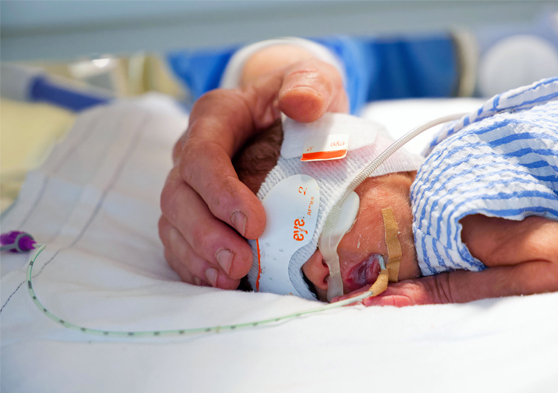
The CIRCA DIEM Study is a clinical research study being coordinated by the Chronobiology Team at The Kids Research Institute Australia, who are based in Perth, Western Australia and involving research teams from around the world.
The CIRCA DIEM Study is a multicentre study, involving several different hospital sites across Australia. Here, you can find out more about which hospitals recruit babies into the CIRCA DIEM Study.