
Search
A broad range of interests characterized by unusual content and/or intensity, labeled as circumscribed interests are a core diagnostic feature of autism. Recent evidence suggests that a distinction can be drawn between interests that, although characterized by unusually high intensity and/or inflexibility, are otherwise common in terms of their content (e.g., an interest in movies or animals), labeled as restricted interests and interests that are generally not salient outside of autism (e.g., an interest in traffic lights or categorization), labeled as unusual interests.
Circumscribed interests encompass a range of different interests and related behaviors that can be characterized by either a high intensity but otherwise usual topic [referred to as restricted interests] or by a focus on topics that are not salient outside of autism [referred to as unusual interests].
This study examined whether parent-reported atypical development in their child's first year was associated with age of diagnosis and age when parents first needed to consult a specialist about their child's development.
Researchers do not know much about what autistic adults, parents and professionals think about support goals for young autistic children. People's views of support goals might also be influenced by their beliefs about early support more generally. This survey involved 87 autistic adults, 159 parents of autistic children and 80 clinical professionals living in New Zealand and Australia.
The PEDI-CAT (ASD) is used to assess functioning of children and youth on the autism spectrum; however, current psychometric evidence is limited. This study aimed to explore the reliability, validity and acceptability of the PEDI-CAT (ASD) using a large Australian sample.
There is a common mischaracterisation that autistic individuals have reduced or absent empathy. Measurement issues may have influenced existing findings on the relationships between autism and empathy, and the structure of the empathy construct in autism remains unclear.

Andrew Whitehouse has been listed in the WA Business News 40 under 40 awards recognising accomplished and dynamic young leaders in Western Australia.
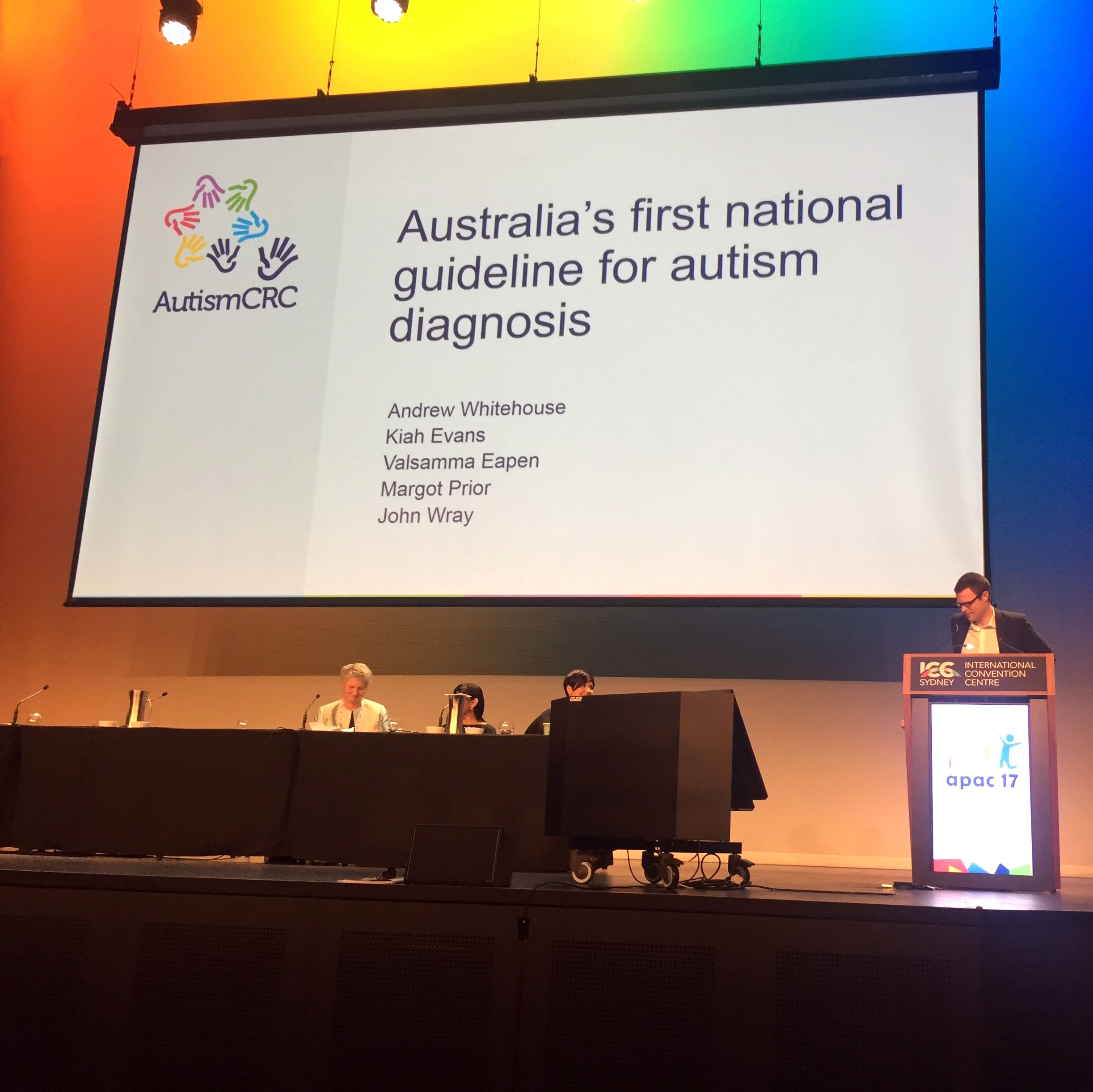
Australia’s first draft national guideline for autism diagnosis has today been released for public consultation.
New research links poor language to lack of Vitamin D in womb.

Professor Andrew Whitehouse awarded the most prestigious award in the country for young researchers – the 3M Eureka Prize for Emerging Leader in Science.