
Search
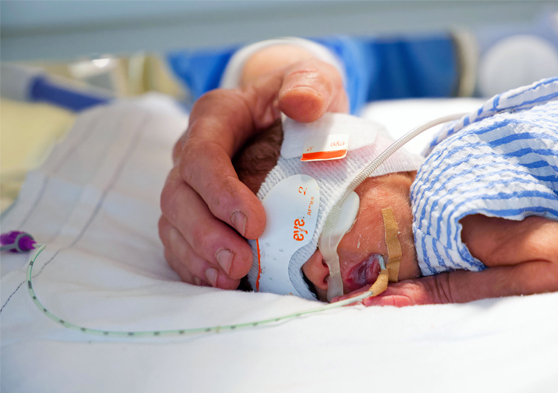
A sub-study is an ‘add-on’ study that helps to answer specific questions within a larger research project. If you decide to participate in the CIRCA DIEM study, you or your child may be invited to take part in one of the CIRCA DIEM sub-studies.
The CIRCA DIEM study aims to establish if cycling environmental light and noise levels for premature infants during their initial hospital stay leads to earlier development of circadian (daily) rhythms and better outcomes for the preterm babies, including improved brain development.
Graham Jane Shannon Hall Pillow Simpson BAppSci PhD CRFS FANZSRS FThorSoc FERS BMedSci (Dist) MBBS, PhD (Dist) FRACP BMedSci (hons), PhD Honorary
The extent of lung hypoplasia impacts the survival and severity of morbidities associated with congenital diaphragmatic hernia.
A previous systematic review showed that intramuscular vitamin A supplementation reduced the risk of bronchopulmonary dysplasia (BPD) in very-low-birth-weight (VLBW) infants. However, more recent studies have questioned this finding.
Vitamin A has anti-inflammatory and immune-modulating properties. We aimed to assess whether enteral water-soluble vitamin A supplementation in extremely preterm infants decreases fecal calprotectin, a marker of intestinal inflammation.
The importance of lung recruitment before surfactant administration has been shown in animal studies. Well designed trials in preterm infants are absent. We aimed to examine whether the application of a recruitment manoeuvre just before surfactant administration, followed by rapid extubation (intubate-recruit-surfactant-extubate [IN-REC-SUR-E]), decreased the need for mechanical ventilation during the first 72 h of life compared with no recruitment manoeuvre (ie, intubate-surfactant-extubate [IN-SUR-E]).
Since the first description of bronchopulmonary dysplasia (BPD), multiple definitions to diagnose BPD and its grading have been published. Several studies have compared the predictive performance of these definitions for long-term outcomes. The objective was to identify the BPD definition with the optimal predictive performance for long-term respiratory and neurological outcomes in preterm infants.
Jane Pillow BMedSci (Dist) MBBS, PhD (Dist) FRACP Head, Developmental Chronobiology jane.pillow@thekids.org.au Head, Developmental Chronobiology
Understand how bronchopulmonary dysplasia (BPD) and antenatal and postnatal factors influence diaphragmatic functional effectiveness in very preterm infants.