
Search
Researchers at Telethon Institute have found genetic differences in the rare and aggressive NUT-midline carcinoma, presenting new treatment opportunities.
A new study led by Australian researchers has outlined for the first time the best treatment options for children suffering from meningioma
The Telethon Adventurers have announced a new research fellowship to investigate the genes involved in childhood brain tumours.
Cancer researchers at Perth's The Kids for Child Health Research have discovered a genetic pattern that predicts the likelihood of relapse
Work by the Institute's Division of Children's Leukaemia and Cancer Research has been recognised with three research grants from the Cancer Council of WA.
Apache Energy and the Telethon Institute for Child Health Research today signed a two-year partnership
A state of the art 3D molecular imager that will help researchers monitor how brain tumours grow has been delivered to the Telethon Institute.
The Telethon Institute for Child Health Research today announced a new study investigating a vaccine to prevent infection of Human Papilloma Virus (HPV).
Citation: Sek K, Chen AXY, Cole T, Armitage JD, Tong J, ……… Waithman J, Parish IA, et al. Tumor site-directed A1R expression enhances CAR T cell
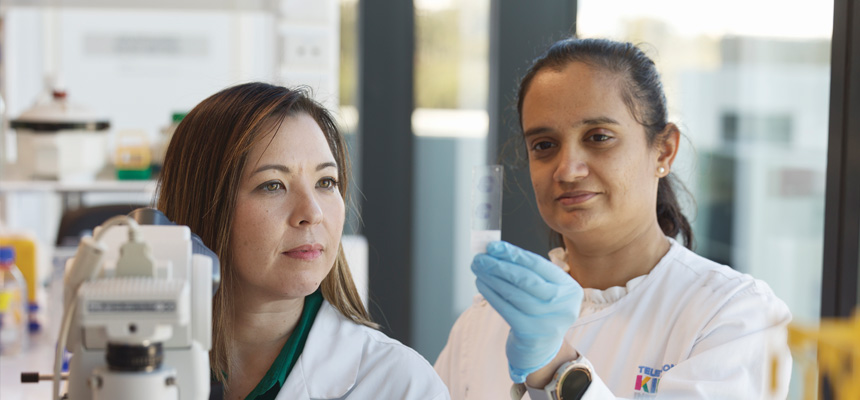
The WA Kids Cancer Centre has a suite of world-leading research projects to unlock new treatments for childhood cancers.