
Search
Cancer is a leading cause of death globally. Accurate cancer burden information is crucial for policy planning, but many countries do not have up-to-date cancer surveillance data. To inform global cancer-control efforts, we used the Global Burden of Diseases, Injuries, and Risk Factors Study (GBD) 2023 framework to generate and analyse estimates of cancer burden for 47 cancer types or groupings by age, sex, and 204 countries and territories from 1990 to 2023, cancer burden attributable to selected risk factors from 1990 to 2023, and forecasted cancer burden up to 2050.
People with intellectual disability experience higher rates of physical and mental health problems than those without intellectual disability. Health literacy includes accessing, understanding, appraising and applying health information. Improving health literacy is associated with better health outcomes. The internet is a primary source of health information for many people. This study aimed to evaluate available online health resources for people with intellectual disability and their families to understand information gaps.
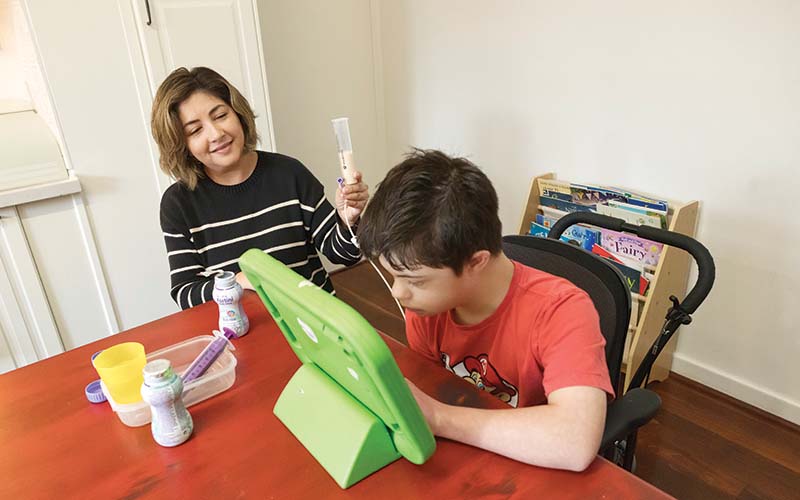
For thousands of children around Australia with intellectual and other disabilities, the process of eating can be traumatic, posing challenges that veer from uncomfortable to life threatening.
Wearable motion sensors, specifically, Inertial Measurement Units, are useful tools for the assessment of orientation and movement during sleep. The DOTs platform (Xsens, Enschede, The Netherlands) has shown promise for this purpose. This pilot study aimed to assess its feasibility and validity for recording sleep biomechanics.
With advances in perinatal care, we have achieved major reductions in mortality in premature and critically ill infants, but they still remain at increased risk of neurodevelopmental disability. In this context, recent advances in neuroimaging are perceived as an addition of significant value to current clinical developmental screening programs.
This systematic review aimed to identify the most important social, environmental, biological, and/or genetic risk factors for intellectual disability.
The aim of this study was to devise an evidence-based missing data rule for the Quality of Life Inventory-Disability (QI-Disability) questionnaire specifying how many missing items are permissible for domain and total scores to be calculated using simple imputation.
This study investigated the influence of factors at birth and in infancy on the likelihood of achieving major motor milestones in CDKL5 Deficiency Disorder (CDD). Data on 350 individuals with a pathogenic CDKL5 variant was sourced from the International CDKL5 Disorder Database.
The implementation of an intervention protocol aimed at increasing vocal complexity in three pre-linguistic children with cerebral palsy (two males, starting age 15 months, and one female, starting age 16 months) was evaluated utilising a repeated ABA case series design. The study progressed until the children were 36 months of age. Weekly probes with trained and untrained items were administered across each of three intervention blocks.
Preterm birth is a global public health problem with a significant burden on the individuals affected. The study aimed to extend current research on preterm birth prognostic model development by developing and internally validating models using machine learning classification algorithms and population-based routinely collected data in Western Australia.