
Search
The relation between intrauterine growth and risk of childhood acute lymphoblastic leukemia was investigated in an Australian population-based case-control...
Glucocorticoids (GCs) are among the most important drugs for the treatment of acute lymphoblastic leukaemia (ALL).
Effective antitumor CD8 T cell responses may be activated by directly targeting the innate immune system within tumors.

A first of its kind research program at The Kids Research Institute Australia aims to develop new strategies to better treat Aboriginal and Torres Strait Islander children with cancer.
Projects to improve outcomes for leukaemia patients and reduce skin cancer rates in young Aboriginal people have received funding through Cancer Council WA.
Leukaemia, also spelled leukemia, is a cancer that develops in the bone marrow and results in abnormal white blood cells. It is the most common cancer in children, accounting for almost a third of all childhood & teen cancers.
Acute lymphoblastic leukaemia (ALL) is the most common paediatric malignancy and remains one of the most common causes of cancer-related death in children and adolescents. It is characterised by the proliferation of immature lymphoid cells capable of infiltrating bone marrow, blood and extramedullary sites. Five-year overall survival rates exceed 90% with current multidrug chemotherapeutic regimens. This manuscript reviews the abdominal imaging features of leukaemic infiltration in children with ALL at the time of initial diagnosis and following relapse.
CD8+ T cells are an important weapon in the therapeutic armamentarium against cancer. While CD8+CD103+ T cells with a tissue-resident memory T (TRM) cell phenotype are associated with favorable prognoses, the tumor microenvironment also contains dysfunctional exhausted T (TEX) cells that exhibit a variety of TRM-like features.
Chemotherapy often kills a large fraction of cancer cells but leaves behind a small population of drug-tolerant persister cells. These persister cells survive drug treatments through reversible, non-genetic mechanisms and cause tumour recurrence upon cessation of therapy. Here, we report a drug tolerance mechanism regulated by the germ-cell-specific H3K4 methyltransferase PRDM9.
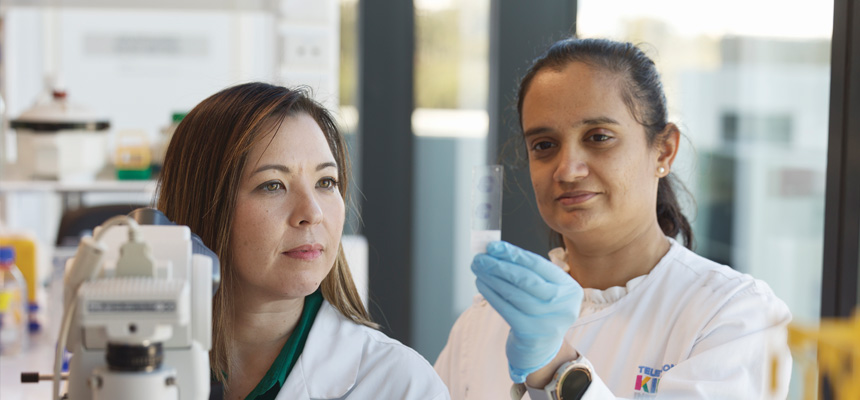
The WA Kids Cancer Centre has a suite of world-leading research projects to unlock new treatments for childhood cancers.