
Search
We present the case of a prepubescent man of African descent who developed a spitzoid melanocytic proliferation showing evidence of a novel promoter hijacking ALK-C2orf42 rearrangement, with atypical histology, clinically apparent metastatic disease, and abnormal cytogenetic findings, representing a rare genuine case of "Spitz melanoma of childhood."
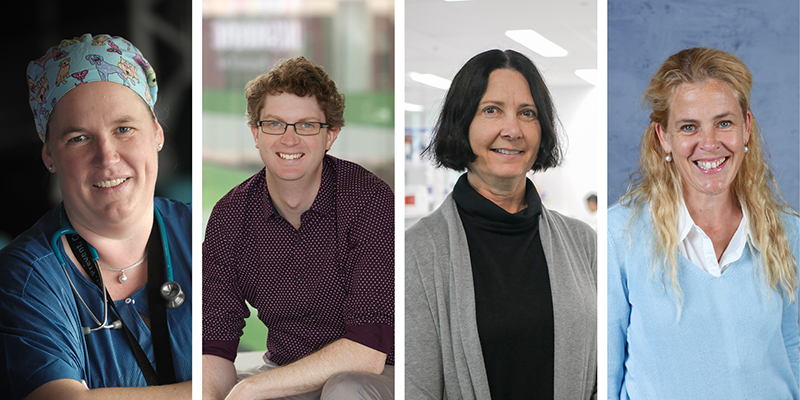
Research projects sharing in a $2.1 million funding boost will seek to translate research findings into changes that benefit patients and help the health system run more efficiently.
Children living with a rare disease often endure a lengthy journey to diagnosis, commonly referred to as a diagnostic odyssey. This journey significantly impacts their physical, mental and financial wellbeing, in addition to that of their families. The diagnostic odyssey is often characterised by anxiety and stress surrounding the uncertainty of the future. This is experienced by the patient as well as by the family.
An estimated 3.5%-5.9% of the global population live with rare diseases, and approximately 80% of these diseases have a genetic cause. Rare genetic diseases are difficult to diagnose, with some affected individuals experiencing diagnostic delays of 5-30 years. Next-generation sequencing has improved clinical diagnostic rates to 33%-48%. In a majority of cases, novel variants potentially causing the disease are discovered.
The prevalence of taeniasis in Thailand has decreased over the past six decades. However, it remains a public health concern, particularly in focal areas, especially along the border regions where migration between Thailand and neighboring endemic countries is frequent. Spatial distribution analysis provides a useful method for identifying high-risk areas and implementing targeted integrated control measures. This study aimed to examine the spatial patterns of taeniasis in 2008 and 2014, along with their associated One Health risk factors at the sub-district level.
Rare diseases (RD) are conditions affecting fewer than 1 in 2000 persons, with over 7000 largely genetic RDs affecting 3.5 %-5.9 % of the global population, or approximately 262.9–446.2 million people. The substantial healthcare burden and costs, such as the $1 trillion annual expense in the USA, highlight the urgent need for improved RD management. The International Rare Diseases Research Consortium (IRDiRC) addresses this need through global collaboration, aiming for timely and accurate diagnosis, development of 1000 new therapies, and methodologies to measure impact by 2027.
People living with rare diseases had a high risk of negative health outcomes due to COVID-19. Pandemic preparedness will ensure best practice procedures and optimal outcomes during future pandemic events. This paper sought to understand the needs of children with rare diseases during the COVID-19 pandemic to inform preparation for future pandemic and disaster events. First, impacts and outcomes from the COVID-19 pandemic on people living with rare disease were identified in the literature.
Genetic diagnosis plays a crucial role in rare diseases, particularly with the increasing availability of emerging and accessible treatments. The International Rare Diseases Research Consortium (IRDiRC) has set its primary goal as: "Ensuring that all patients who present with a suspected rare disease receive a diagnosis within one year if their disorder is documented in the medical literature".

Recently, researchers from The Kids Research Institute Australia, Perth Children’s Hospital and The University of Western Australia contributed to three major international publications, collectively reinforcing rare diseases as a critical, community-wide health priority.

The Kids Research Institute Australia is proud to be a part of the Rare Care Comprehensive Centre (RCCC) for children with rare and undiagnosed disease, made possible thanks to one of Western Australia’s biggest philanthropic gifts.