
Search
Several researchers have hypothesised that individuals with Autism Spectrum Disorder (ASD) show encoding delays in their obligatory event-related potentials (ERPs)/ event-related fields (ERFs) for low-level auditory information compared to neurotypical (NT) samples. However, empirical research has yielded varied findings, such as low-level auditory processing in ASD samples being unimpaired, superior, or impaired compared to NT samples. Diverse outcomes have also been reported for studies investigating ASD-NT differences in functional lateralisation of delays.
The aim of this study was to understand the challenges experienced by families obtaining a diagnosis and therapy for developmental coordination disorder (DCD). Parents of 435 children aged 4-18 years with persistent motor difficulties consistent with a diagnosis of DCD completed an online survey. Diagnostic timeline and diagnostic label/s received were examined, along with therapies accessed.
Birth order effects have been linked to variability in intelligence, educational attainment and sexual orientation. First- and later-born children have been linked to an increased likelihood of an Autism Spectrum Disorder (ASD) diagnosis, with a smaller body of evidence implicating decreases in cognitive functioning with increased birth order. The present study investigated the potential association between birth order and ASD diagnostic phenotypes in a large and representative population sample.

A game-changing approach to autism support that aims to have all autistic kids in Western Australia able to communicate effectively by school entry has received more than $11 million in funding.
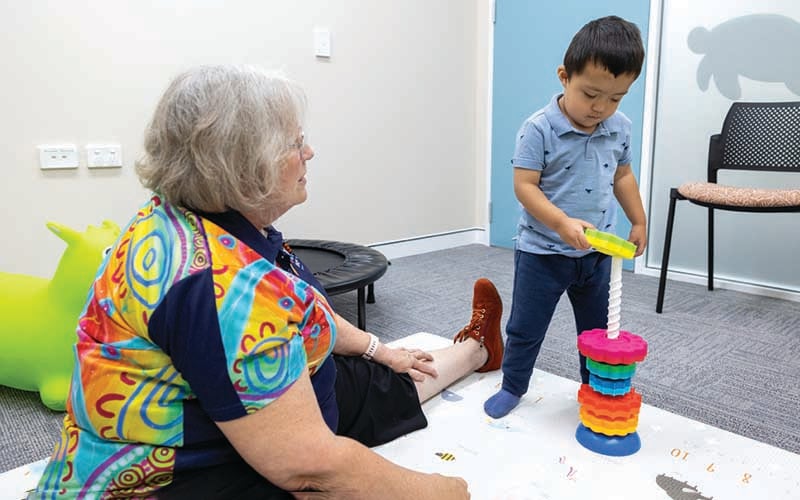
Discover how this family is benefitting from CliniKids' evidence-based therapies.
Autism spectrum disorder (ASD), a neurodevelopmental condition characterised by social and communication differences, is complex and aetiologically heterogeneous. Untargeted metabolomics is emerging as a tool in screening for biochemical abnormalities. This research was conducted using the Australian Autism Biobank resource and involved analysis of plasma metabolites to characterise metabolite differences between autistic children and controls.
Autistic children have an increased likelihood of anxiety, but more research is needed on the characteristics that predict various types of anxiety in this population.
We do not know much about what support services people think are okay for young autistic children. This study was a survey of 253 people. We asked autistic adults, parents, and professionals from Australia and New Zealand whether they thought it was okay to provide support services to autistic children.
It is unclear whether sex differences in behavior arising from birth weight (BW) are genuine because of the cross-sectional nature and potential confounding in previous studies. We aimed to test whether sex differences associated with BW phenotype were reproducible using a Mendelian randomization approach, i.e., association between polygenic score (PGS) for BW and behavior outcomes across childhood and adolescence.
Aotearoa New Zealand does not provide publicly-funded intensive autism support. While parent-mediated supports are promising, children and families may also benefit from direct clinician support. We tested the efficacy of a low-intensity programme involving parent- and clinician-delivered support for autistic children.