
Search
Tick-borne diseases are a growing global health concern. Despite extensive studies, ill-defined tick-associated pathologies remain with unknown aetiologies. Human immunological responses after tick bite, and inter-individual variations of immune-response phenotypes, are not well characterised.
Influenza vaccination of children with medical comorbidities is critical due their increased risks for severe influenza disease. In Australia, hospitals are an avenue for influenza vaccine delivery to children with comorbidities but are not always effectively utilised. Qualitative enquiry sought to ascertainment the barriers and enablers for influenza vaccination recommendation, delivery, and recording of these children at Australian hospitals.
In children, chronic wet cough may be a sign of underlying lung disease, including protracted bacterial bronchitis (PBB) and bronchiectasis. Chronic (> 4 weeks in duration) wet cough (without indicators pointing to alternative causes) that responds to antibiotic treatment is diagnostic of PBB. Timely recognition and management of PBB can prevent disease progression to irreversible bronchiectasis with lifelong consequences. However, detection and management require timely health-seeking by carers and effective management by clinicians.
Persistent respiratory bacterial infections are a clinical burden in several chronic inflammatory airway diseases and are often associated with neutrophil infiltration into the lungs. Following recruitment, dysregulated neutrophil effector functions such as increased granule release and formation of neutrophil extracellular traps (NETs) result in damage to airway tissue, contributing to the progression of lung disease.
Previous Australian studies have shown that delayed vaccination with each of the three primary doses of diphtheria-tetanus-pertussis-containing vaccines (DTP) is up to 50 % in certain subpopulations. We estimated the excess burden of pertussis that might have been prevented if (i) all primary doses and (ii) each dose was given on time.
The benefits that swimming pools may bring to to ear and eye health in remote Aboriginal communities remains unresolved
Given the ongoing mortality and morbidity from GAS infections, we must address more effectively the treatment and prevention of GAS impetigo and pharyngitis
Scabies is endemic in many Aboriginal and Torres Strait Islander communities, with 69% of infants infected in the first year of life.
We still do not have a RF vaccine, although the recent announcement that the Australian and New Zealand governments are jointly sponsoring a program to fast...
The median number of presentations per child in the first year of life was 21 with multiple reasons for presentation.
Providing remote communities with access to chlorinated swimming pools has been considered as a possible strategy for reducing ear and skin infection rates...

Families living in remote Kimberley communities are paying up to twice as much for everyday items needed to support healthy living, according to new research led by The Kids Research Institute Australia.

Three researchers from The Kids Research Institute Australia were recognised as being among Western Australia’s brightest and most innovative scientific minds at last night’s 24th Premier's Science Awards.
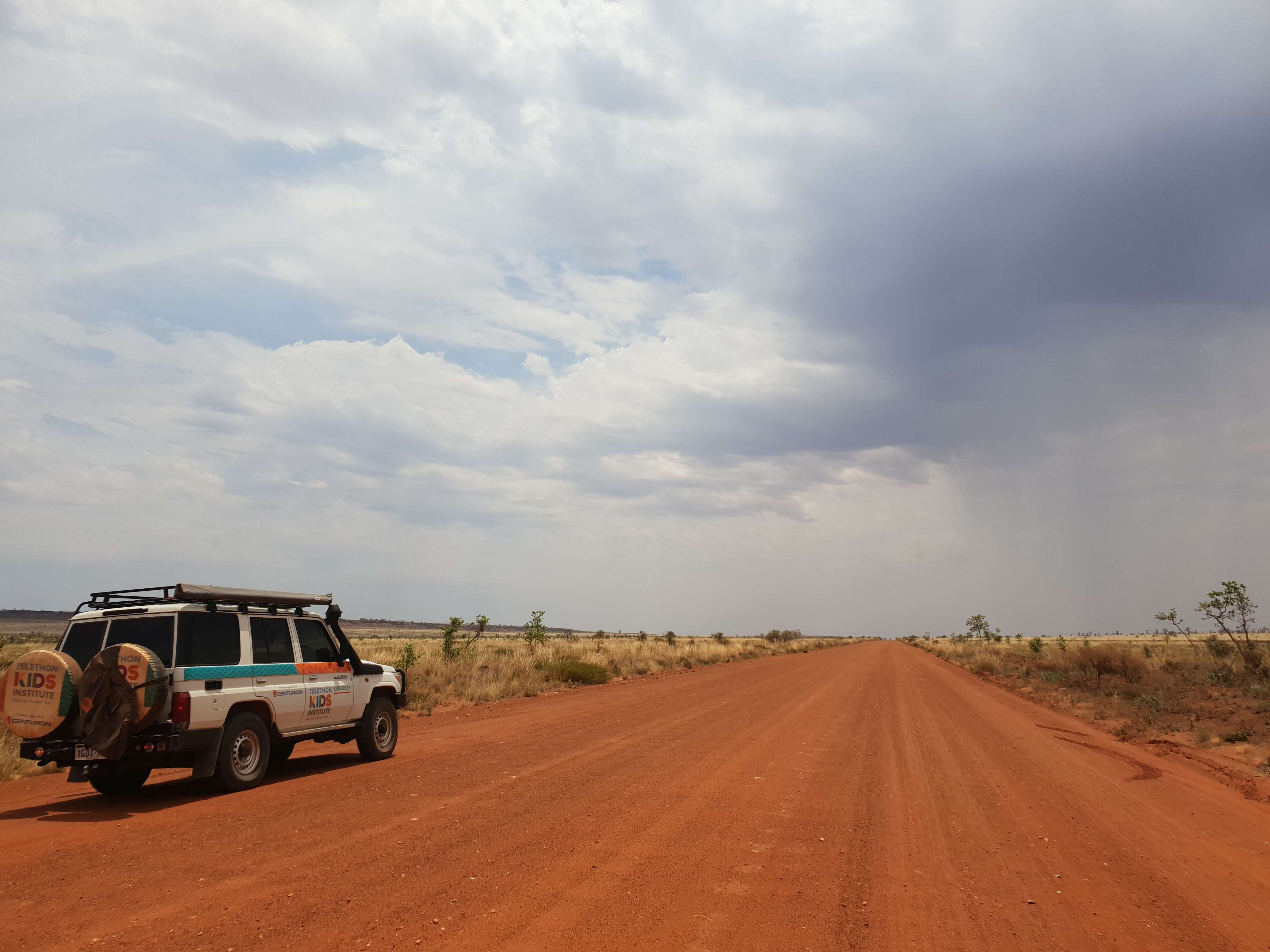
Led by The Kids Research Institute Australia and Aboriginal health organisations in close partnership with nine Aboriginal communities in Western Australia’s Kimberley region, the five-year SToP Trial set out to identify the best possible methods to See, Treat and Prevent painful skin sores and scabies.

A children’s book – written by community, for community – has been launched in Western Australia’s south-west to help children and families understand more about one of the most common inflammatory skin conditions in children.