
Search

The Human Development and Community Wellbeing (HDCW) Team focuses on improving outcomes for children, family, and the community.
Handedness has been studied for association with language-related disorders because of its link with language hemispheric dominance. No clear pattern has emerged, possibly because of small samples, publication bias, and heterogeneous criteria across studies.
Investigating the impact of early childhood ventilation tube insertion (VTI) on long-term language outcomes.
While theory supports bidirectional effects between caregiver sensitivity and language use, and infant language acquisition-both caregiver-to-infant and also infant-to-caregiver effects-empirical research has chiefly explored the former unidirectional path. In the context of infants showing early signs of autism, we investigated prospective bidirectional associations with 6-min free-play interaction samples collected for 103 caregivers and their infants (mean age 12-months; and followed up 6-months later).
Prenatal alcohol exposure (PAE) contributes to widespread neurodevelopmental challenges, including reading, and has been associated with altered white matter. Here, we aimed to investigate whether arcuate fasciculus development is associated with pre-reading language skills in young children with PAE.
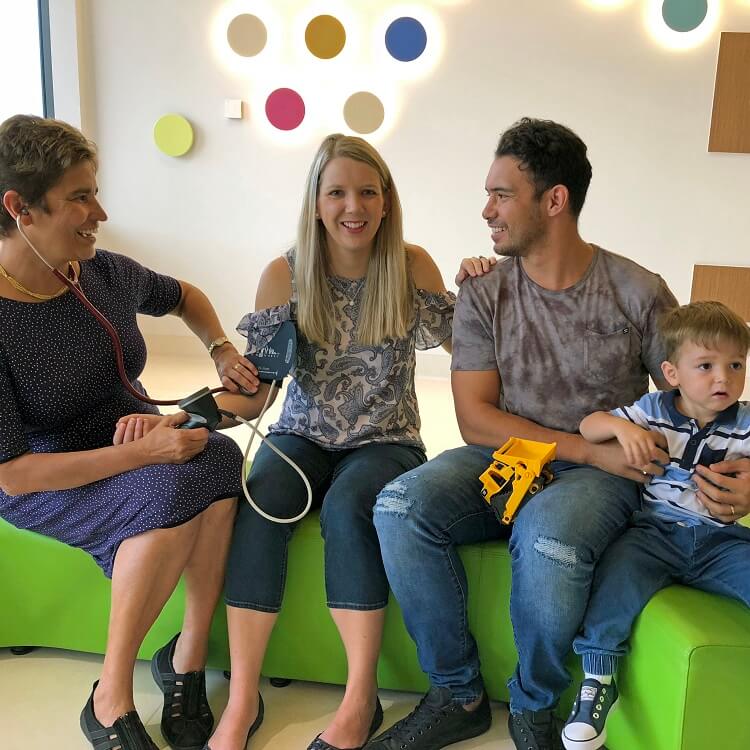
ORIGINS, a collaboration between The Kids and the Joondalup Health Campus, has achieved a major milestone – recruiting its 1000th family.
The number of words children produce (expressive vocabulary) and understand (receptive vocabulary) changes rapidly during early development, partially due to genetic factors. Here, we performed a meta-genome-wide association study of vocabulary acquisition and investigated polygenic overlap with literacy, cognition, developmental phenotypes, and neurodevelopmental conditions, including attention-deficit/hyperactivity disorder.
New research links poor language to lack of Vitamin D in womb.
Telethon Kids Institute researchers have been awarded an Australian Research Council grant to explore how testosterone levels in the womb can impact on a child'
Reading and writing are crucial life skills but roughly one in ten children are affected by dyslexia, which can persist into adulthood. Family studies of dyslexia suggest heritability up to 70%, yet few convincing genetic markers have been found.