
Search
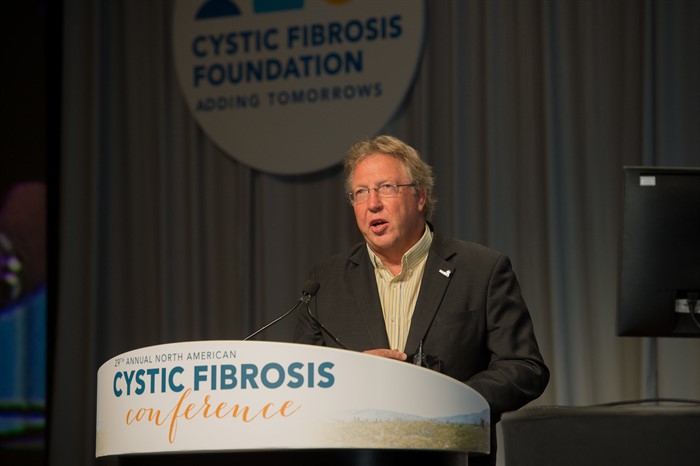
Professor Stephen Stick has been awarded the prestigious Richard C. Talamo Distinguished Clinical Achievement Award from the US Cystic Fibrosis Foundation.
Researchers at Perth's Telethon Institute are one step closer to preventing serious lung disease which is the main cause of suffering in cystic fibrosis.
A population of neutrophils recruited into cystic fibrosis (CF) airways is associated with proteolytic lung damage, exhibiting high expression of primary granule exocytosis marker CD63 and reduced phagocytic receptor CD16. Causative factors for this population are unknown, limiting intervention. Here we present a laboratory model to characterize responses of differentiated airway epithelium and neutrophils following respiratory infection.
Infants with cystic fibrosis (CF) develop structural lung disease early in life, and viral infections are associated with progressive lung disease. We hypothesized that the presence of respiratory viruses would be associated with structural lung disease on computed tomography (CT) of the chest in infants with CF.
Primary ciliary dyskinesia (PCD) is a rare, progressive, inherited ciliopathic disorder, which is incurable and frequently complicated by the development of bronchiectasis. There are few randomised controlled trials (RCTs) involving children and adults with PCD and thus evidence of efficacy for interventions are usually extrapolated from people with cystic fibrosis.
In the Saline Hypertonic in Preschoolers (SHIP) study, inhaled 7% hypertonic saline improved the lung clearance index in children aged 3-6 years with cystic fibrosis, but it remained unclear whether improvement is also seen in structural lung disease. We aimed to assess the effect of inhaled hypertonic saline on chest CT imaging in children aged 3-6 years with cystic fibrosis.
The marked heterogeneity in cystic fibrosis (CF) disease complicates the selection of those most likely to benefit from existing or emergent treatments. We aimed to predict the progression of bronchiectasis in preschool children with CF.
Scedosporium spp. are the second most prevalent filamentous fungi after Aspergillus spp. recovered from cystic fibrosis (CF) patients in various regions of the world. Although invasive infection is uncommon prior to lung transplantation, fungal colonization may be a risk factor for invasive disease with attendant high mortality post-transplantation. Abundant in the environment, Scedosporium aurantiacum has emerged as an important fungal pathogen in a range of clinical settings.
There is no data exclusively on the relationship between health-related quality-of-life (HRQOL) and lung disease severity in early school-aged children with cystic fibrosis (CF). Using data from the Australian Respiratory Early Surveillance Team for Cystic Fibrosis (AREST CF) we assessed the relationships between HRQOL, lung function and structure.
This review reports on methods used to evaluate airway clearance techniques (ACT) in adults with CF and examined data for evidence of any effect. Sixty-eight studies described ACT in adequate detail and were included in this review.