Skip to content

Search

Anesthetic Exposure During Childhood and Neurodevelopmental Outcomes: A Systematic Review and Meta-analysis

Clinical studies of neurodevelopmental outcomes after anesthetic exposure have evaluated a range of outcomes with mixed results.

Therapy for babies with signs of autism cuts long-term disability costs

New research evaluating the potential cost savings of a therapy for babies displaying early autism signs has predicted a three dollar return to Australia’s National Disability Insurance Scheme (NDIS) for every dollar invested in therapy.

Estimated Therapy Costs and Downstream Cost Consequences of iBASIS-Video Interaction to Promote Positive Parenting Intervention vs Usual Care Among Children Displaying Early Behavioral Signs of Autism in Australia

The growing global prevalence of autism spectrum disorder is associated with increasing costs for support services. Ascertaining the effects of a successful preemptive intervention for infants showing early behavioral signs of autism on human services budgets is highly policy relevant.

Assessing Restricted and Repetitive Behaviours in Online-Sampled Autistic and Non-autistic Individuals: Factor Structure of the Repetitive Behaviours Questionnaire for Adults (RBQ-2A)

The Repetitive Behaviours Questionnaire for Adults (RBQ-2A) measures two factors of restricted and repetitive behaviours (RRBs) associated with autism. However, the Diagnostic and Statistical Manual of Mental Disorders (DSM-5) provides four criteria for RRBs: repetitive motor behaviours, insistence on sameness, restricted interests, and interest in sensory aspects of the environment (or atypical sensitivity).

Cognitive Orientation to daily Occupational Performance

The CO-OP approach guides children to independently discover and develop cognitive strategies to perform the necessary tasks of everyday living.

Early Start Denver Model

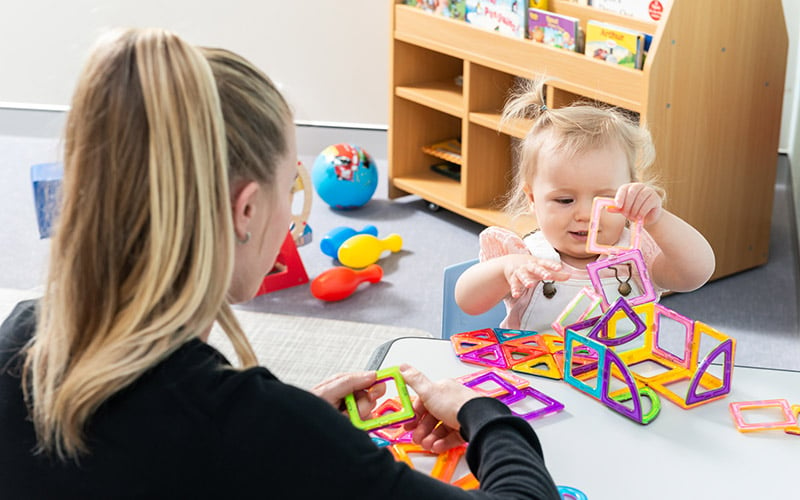
The ESDM aims to promote a child’s development across all domains, including language, joint attention, imitation, cognition, play and social skills, and fine and gross motor skills.

Joint Attention, Symbolic Play, Engagement and Regulation

At CliniKids, the JASPER approach is for preschool and school-aged children who have differences in play and social communication skills.

Shared Book Reading Program

Find out more about CliniKids' new program which boosts early language skills through book sharing.

The use of language in autism research

The past three decades have seen a major shift in our understanding of the strong links between autism and identity. These developments have called for careful consideration of the language used to describe autism.

Non-pharmacological interventions for autistic children: An umbrella review

The breadth of available non-pharmacological interventions for autistic children, with varying evidence for efficacy summarised in multiple systematic reviews, creates challenges for parents, practitioners, and policymakers in navigating the research evidence. In this article, we report the findings of an umbrella review of 58 systematic reviews of non-pharmacological interventions for autistic children (aged 0–12 years).