Skip to content

Search

Working to end childhood cancer: A father’s story

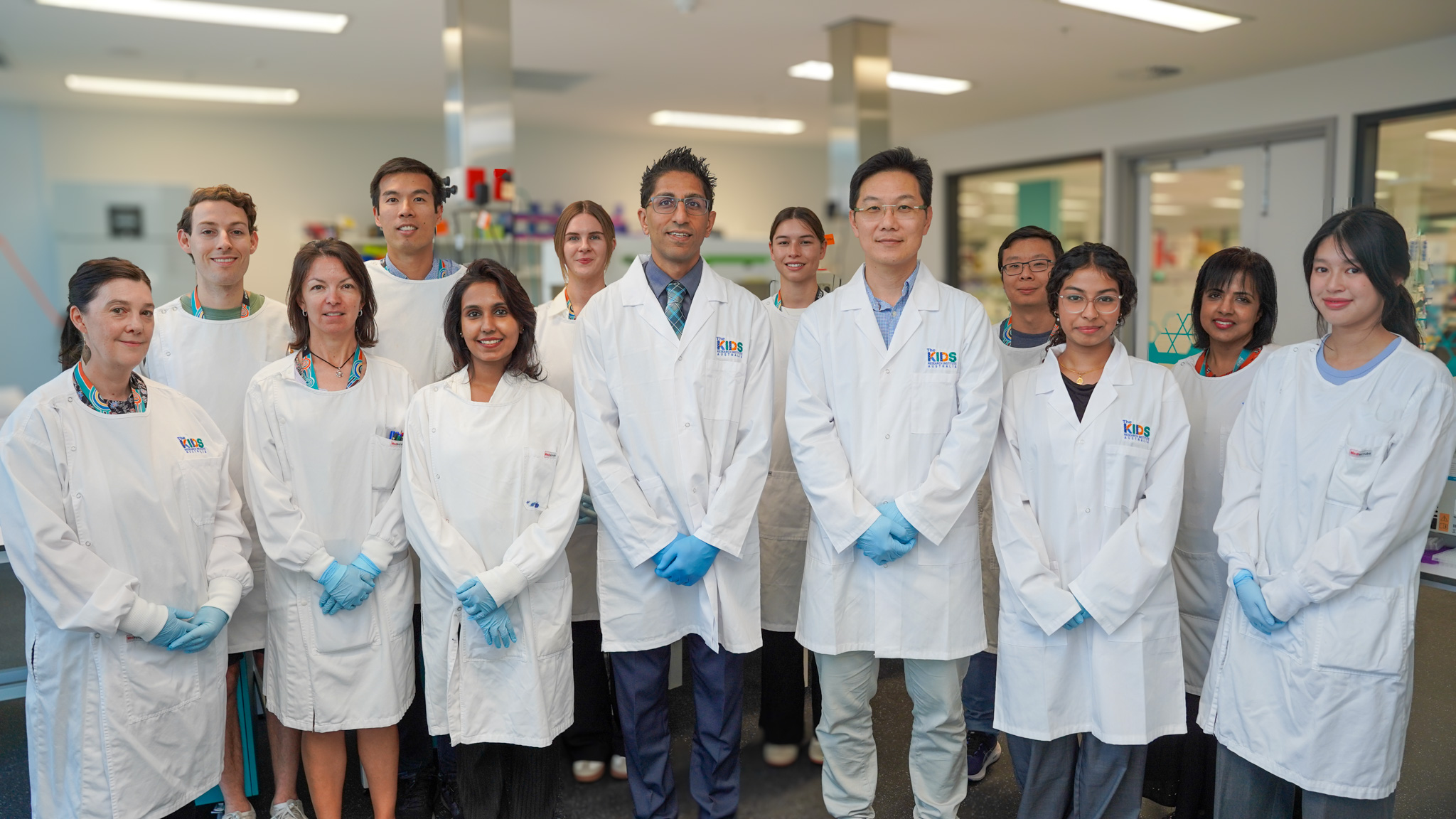
Dr Laurence Cheung is doing everything he can to end the threat of childhood leukemia. His research has the potential to change countless lives, but he also has another important job – being a dad to three beautiful children.

Age-based pegaspargase dosing is safe and achieves therapeutic levels in infants with ALL: report from COG AALL15P1

Rishi S. Kotecha MB ChB (Hons) MRCPCH FRACP PhD Co-Head, Leukaemia Translational Research rishi.kotecha@health.wa.gov.au Co-Head, Leukaemia

Perspectives on the origin and therapeutic opportunities in Down syndrome-associated leukemia

It is now well accepted that germline or de novo genetic alterations predispose to cancer development, especially during childhood. Among them, constitutive trisomy 21, also known as Down syndrome (DS), has been shown to predispose to acute leukemia affecting both the myeloid (ML-DS) and lymphoid (DS-ALL) lineages. ML-DS is associated with a good prognosis compared to children without DS, due in part to a higher sensitivity to conventional chemotherapy.

Boosting the influenza vaccine schedule in children with cancer: a prospective open-label study

Current immunization guidelines recommend one dose of influenza vaccine for children aged ≥9 years and two doses for younger or vaccine-naïve children. However, children receiving chemotherapy have an attenuated immune response. We performed a prospective open-label study in children undergoing treatment for cancer at Perth Children's Hospital, Western Australia, to examine the safety and efficacy of a boosted influenza schedule.

High Expression of NTRK1 in ETV6::RUNX1 Positive Acute Lymphoblastic Leukaemia Drives Factor Independence and Sensitivity to Larotrectinib

ETV6::RUNX1 is one of the most common recurrent genomic abnormalities in acute lymphoblastic leukaemia (ALL) and is associated with a good prognosis. High expression of NTRK1, encoding tropomyosin receptor kinase A (TrkA), confers a poor prognosis in other malignancies and may contribute to therapy resistance in patients with ETV6::RUNX1 B-ALL.

Molecular-genetic profiling and high-throughput in vitro drug screening in NUT midline carcinoma-An aggressive and fatal disease

Our data emphasize the heterogeneity of NMC and highlights genetic aberrations that could be explored to improve therapeutic strategies.

Regular exercise improves the well-being of parents of children with cancer

Mental health benefits of a pedometer-based exercise intervention for parents of children with cancer were identified.

Immunogenicity and safety of single-dose, 13-valent pneumococcal conjugate vaccine in pediatric and adolescent oncology patients

All children who are receiving therapy for cancer should receive a single dose of PCV13 as soon as possible after diagnosis, regardless of prior PCV exposure.

Antifungal use in children with acute leukaemia: state of current evidence and directions for future research

Invasive fungal disease (IFD) remains a common and serious complication in children treated for leukaemia. Antifungal prescription in children with leukaemia presents unique challenges, particularly due to variation in IFD risk between and within leukaemia treatment protocols, drug toxicities and interactions between antifungals and chemotherapeutic agents.

COVID-19 vaccination in children and adolescents aged 5 years and older undergoing treatment for cancer and non-malignant haematological conditions: Australian and New Zealand Children’s Haematology/Oncology Group consensus statement

The Australian Technical Advisory Group on Immunisation and New Zealand Ministry of Health recommend all children aged ≥ 5 years receive either of the two mRNA COVID-19 vaccines: Comirnaty (Pfizer), available in both Australia and New Zealand, or Spikevax (Moderna), available in Australia only. Both vaccines are efficacious and safe in the general population, including children. Children and adolescents undergoing treatment for cancer and immunosuppressive therapy for non-malignant haematological conditions are particularly vulnerable, with an increased risk of severe or fatal COVID-19.