
Search
The rise of sedimentary ancient DNA (sedaDNA) studies has opened new possibilities for studying past environments. This groundbreaking area of genomics uses sediments to identify organisms, even in cases where macroscopic remains no longer exist. Managing this substrate in Indigenous Australian contexts, however, requires special considerations. Sediments and soils are often considered as waste by-products during archaeological and paleontological excavations and are not typically regulated by the same ethics guidelines utilised in mainstream 'western' research paradigms.
Genomic sequencing in congenital heart disease (CHD) patients often discovers novel genetic variants, which are classified as variants of uncertain significance (VUS). Functional analysis of each VUS is required in specialised laboratories, to determine whether the VUS is disease causative or not, leading to lengthy diagnostic delays.
The Australian Genomics Cardiovascular Disorders Flagship was a national multidisciplinary collaboration. It aimed to investigate the feasibility of genome sequencing and functional genomics to resolve variants of uncertain significance in the clinical management of patients and families with cardiomyopathies, primary arrhythmias, and congenital heart disease.
Genomic information is increasingly used to inform medical treatments and manage future disease risks. However, any personal and societal gains must be carefully balanced against the risk to individuals contributing their genomic data. Expanding our understanding of actionable genomic insights requires researchers to access large global datasets to capture the complexity of genomic contribution to diseases.
To define clinical common data elements (CDEs) and a mandatory minimum data set (MDS) for genomic studies of cerebral palsy (CP). Method: Candidate data elements were collated following a review of the literature and existing CDEs.
The goal of this study was to understand individuals with cerebral palsy (CP) and their family's attitudes and preferences to genomic research, including international data sharing and biobanking.
Mitochondrial energy metabolism plays an important role in the pathophysiology of insulin resistance. Recently, a missense N437S variant was identified in the MRPP3 gene, which encodes a mitochondrial RNA processing enzyme within the RNase P complex, with predicted impact on metabolism. We used CRISPR-Cas9 genome editing to introduce this variant into the mouse Mrpp3 gene and show that the variant causes insulin resistance on a high-fat diet.

A national alliance of the brightest minds in genomic science, academia, policy makers, industry and Indigenous leaders will work to break down barriers to ensure Aboriginal and Torres Strait Islander people can benefit from advances in genomic medicine if they choose.
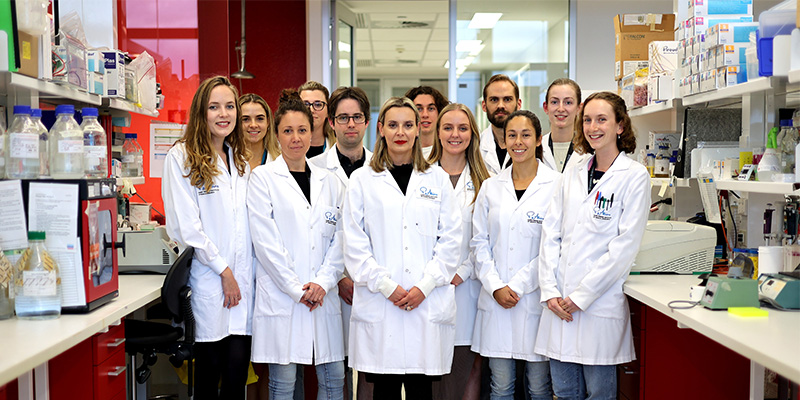
Aleksandra Filipovska has been elected a Fellow of the Australian Academy of Health and Medical Sciences.

Head, Epigenetics